Top 11 Cutest Birds in the US: America’s Feathered Friends
The world of birds offers a delightful array of feathered friends that capture our hearts with their charm and beauty.
In the United States, we are fortunate to have many adorable avian species that bring joy to our backyards and natural spaces.
This post will explore the 11 cutest birds found in America, showcasing their unique features and endearing qualities.
Key Takeaways
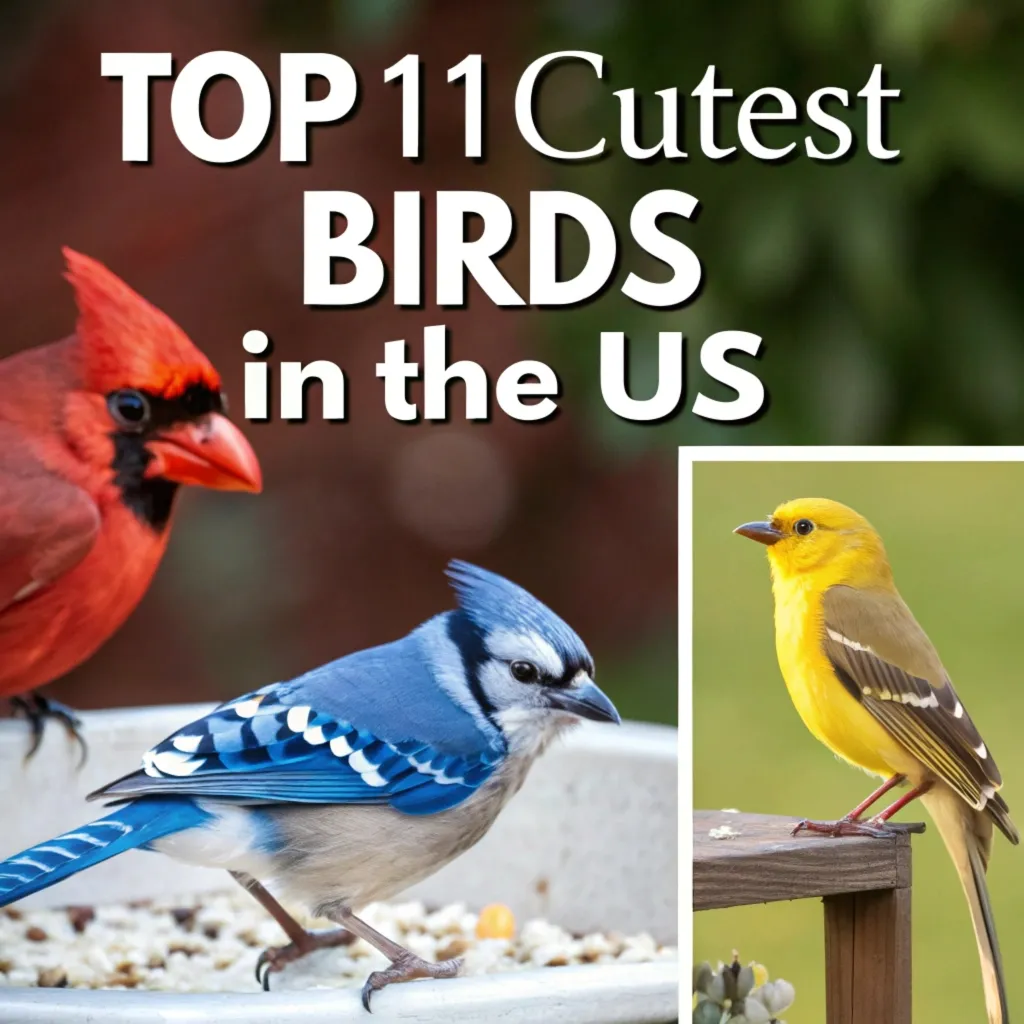
- American Goldfinch: Bright yellow plumage with black wings
- Northern Cardinal: Vibrant red males with distinctive crests
- Eastern Bluebird: Soft blue feathers and sweet songs
- Blue Jay: Striking blue and white plumage with a prominent crest
- Indigo Bunting: Intense blue coloration in breeding males
- Anna’s Hummingbird: Iridescent feathers and acrobatic flight
- Red-headed Woodpecker: Bold red, black, and white color pattern
- Scarlet Tanager: Brilliant red body with black wings
- Baltimore Oriole: Orange and black plumage with melodious songs
- Painted Bunting: Multi-colored males with vibrant hues
- Rose-breasted Grosbeak: Black and white with a rose-red breast patch

American Goldfinch: A Sunny Delight

The American Goldfinch stands out as one of the cutest birds in the United States. These small songbirds measure about 4.3 to 5.1 inches in length, making them adorably compact. Male goldfinches sport a bright yellow plumage during the breeding season, complemented by black wings and a black cap. This vibrant coloration makes them a joy to observe in gardens and open fields.
Female goldfinches have a more subdued appearance with olive-brown feathers, but they are no less charming. These birds are often seen perched on thistle and sunflower plants, using their conical beaks to extract seeds. Their cheerful presence and acrobatic feeding habits make them a favorite among birdwatchers.
An interesting fact about American Goldfinches is their unique song, often described as sounding like “po-ta-to-chip“. They sing this melodious tune while in flight, adding a musical element to their already delightful appearance.
Northern Cardinal: A Crimson Charmer

The Northern Cardinal is a striking bird that captures attention with its bold coloration and distinctive crest. Male cardinals boast a brilliant red plumage that contrasts beautifully with their black facial mask. This vibrant appearance makes them easily recognizable and a favorite among bird enthusiasts.
Female cardinals, while less brightly colored, have their own subtle beauty with brown feathers accented by reddish highlights. Their long tails and prominent crests add to their charming appearance. These birds are commonly seen in urban parks and along the edges of deciduous forests.
A fascinating fact about Northern Cardinals is that males get their bright red feathers from carotenoids in their diet. This dietary connection to their stunning appearance makes them even more intriguing to observe and study.
Eastern Bluebird: A Sky-Blue Beauty

The Eastern Bluebird is a small thrush that captivates with its soft blue upperparts and reddish-brown chest. These birds measure approximately 6.3 to 8.3 inches in length, making them perfectly sized for backyard birdwatching. Male bluebirds display more vibrant colors, while females have a duller, grayish appearance.
These charming birds are often found in open country with scattered trees, including fields, meadows, and parks. Their gentle demeanor and sweet songs make them a joy to observe in natural settings.
An endearing fact about Eastern Bluebirds is their courtship displays. Males sing and flutter around potential nest sites to attract females, showcasing their colorful plumage and delightful behaviors. This romantic ritual adds to their overall cuteness and appeal.
Blue Jay: A Bold and Beautiful Bird

The Blue Jay is a large songbird that stands out with its brilliant blue plumage and distinctive crest. Measuring about 9 to 12 inches in length, these birds have a commanding presence in their habitats. Their blue feathers are complemented by white underparts and a black U-shaped collar around the neck.
Blue Jays are commonly found in coniferous and deciduous forests, as well as urban areas. Their intelligence and complex social behaviors make them fascinating to watch. These birds are known for their loud, raucous calls that add character to their surroundings.
An intriguing fact about Blue Jays is their ability to mimic the calls of hawks. This behavior serves to alert other birds of potential predators, showcasing their intelligence and social nature.
Indigo Bunting: A Brilliant Blue Gem

The Indigo Bunting is a small bird that captures attention with its intense blue coloration. Male buntings display a vibrant blue plumage during the summer breeding season, making them a stunning sight in their habitats. Females have a more subdued brown coloration, which helps them blend into their surroundings.
These charming birds typically inhabit open and shrubby areas, including edges of forests and fields. Their small size, measuring about 11.5 to 13 cm in length, adds to their adorable appeal. Indigo Buntings have short, thick bills and stocky bodies, giving them a plump appearance in flight.
A fascinating fact about Indigo Buntings is that their striking blue color comes from the microscopic structure of their feathers, which refracts light, rather than from blue pigment. This unique feature makes their coloration even more remarkable.
Anna’s Hummingbird: A Tiny Iridescent Wonder

The Anna’s Hummingbird is a small, colorful bird that captivates with its iridescent plumage and agile flight. These tiny marvels measure approximately 3.9 to 4.3 inches long, making them one of the smallest birds on our list. Their bronze-green backs and pale grey chests are complemented by vibrant emerald feathers and a sparkling rose-pink throat in males.
These enchanting birds are often found in open woods, shrubs, gardens, and parks, particularly near flowering plants and hummingbird feeders. Their ability to hover and fly backwards adds to their charm and fascination.
An impressive fact about Anna’s Hummingbirds is their courtship display. Males can fly up to 130 feet high and perform a dramatic swoop while producing a unique sound through their tail feathers. This spectacular performance makes them particularly captivating to watch.
Red-headed Woodpecker: A Striking Tri-color Beauty

The Red-headed Woodpecker is a medium-sized bird that stands out with its bold color pattern. These eye-catching birds have a bright red head, neck, and throat, which contrasts sharply with their white belly and black wings. Their large white patches on the wings are particularly noticeable in flight.
These beautiful woodpeckers are typically found in open woodlots, dead timber in swamps, and pine savannas across the eastern United States and southern Canada. Their striking appearance and unique behaviors make them a favorite among bird enthusiasts.
An interesting fact about Red-headed Woodpeckers is their ability to catch insects in mid-air, much like a flycatcher. They are also one of the few woodpecker species that stores food, caching insects in tree crevices for later consumption.
Scarlet Tanager: A Brilliant Red Gem

The Scarlet Tanager is a medium-sized songbird that dazzles with its vibrant coloration. Male tanagers boast bright scarlet plumage with contrasting black wings and tail, making them a stunning sight in their forest habitats. Females have a more subdued olive-yellow coloration, which helps them blend into their surroundings.
These beautiful birds are typically found in mature deciduous forests and mixed deciduous-coniferous forests in the eastern United States. Their stocky build and thick, rounded bills are well-suited for catching insects and eating fruit.
A fascinating fact about Scarlet Tanagers is their dramatic molt after the breeding season. Males change from their bright red plumage to a more olive-yellow hue, which helps them blend into their surroundings during winter.
Baltimore Oriole: An Orange and Black Beauty

The Baltimore Oriole is a small migratory bird that captivates with its bright orange and black plumage. Male orioles are recognized by their vibrant orange undersides and black wings, creating a striking contrast. Females have a more subtle coloration with olive-brown to yellow hues.
These charming birds are often found in open woodlands, orchards, parks, and suburban areas. Their long legs and sharp beaks are well-adapted for their feeding habits and nest-building activities.
An endearing fact about Baltimore Orioles is their sweet, whistling songs that serve both as territorial calls and as a charming backdrop to their vibrant visual appearance. These melodious tunes add to their overall appeal and make them a joy to observe in natural settings.
Painted Bunting: A Living Rainbow

The Painted Bunting is a small finch-like bird that stands out with its incredibly vivid plumage. Male buntings display a striking combination of colors with bright blue heads, green backs, and red underbellies, making them one of the most colorful birds in North America. Females are mostly yellowish-green, which helps them blend into their surroundings.
These beautiful birds are typically found in thickets, woodland edges, and brushy areas alongside roadsides and in suburban environments. Their small size and vibrant colors make them a delightful sight for bird enthusiasts.
An interesting fact about Painted Buntings is their unique courtship display. Males spread their colorful feathers, resembling a tiny male turkey, which is a charming display meant to attract females.
Rose-breasted Grosbeak: A Black, White, and Rose Beauty

The Rose-breasted Grosbeak is a striking bird with a unique color combination. Males have a black head, neck, wings, and back, complemented by a bright rose-red patch on their white breast. This color pattern makes them easily recognizable and visually appealing.
These medium-sized songbirds measure approximately 7.1-8.3 inches in length and have a stocky build with very large triangular bills. They are typically found in open deciduous woods, second-growth areas, and forest edges across much of the northeastern U.S. and Canada.
A heartwarming fact about Rose-breasted Grosbeaks is that males share incubation duties with females and are known to sing while sitting on the nest. This unique behavior showcases their nurturing nature and adds to their overall charm.
Frequently Asked Questions

What makes a bird “cute”?
The perception of cuteness in birds often relates to their size, coloration, behavior, and overall appearance. Small birds with round bodies, large eyes, and soft plumage are typically considered cute. Vibrant colors and unique patterns can also contribute to a bird’s adorable appeal.
Are these cute birds common in urban areas?
Many of these cute birds can be found in urban and suburban areas, especially in parks, gardens, and backyards with suitable habitats. Birds like American Goldfinches, Northern Cardinals, and Blue Jays are often seen in residential areas with proper feeders and vegetation.
How can I attract these cute birds to my backyard?
To attract these adorable birds to your backyard, consider:
- Installing bird feeders with appropriate seeds
- Planting native flowers and shrubs
- Providing a clean water source like a birdbath
- Creating diverse habitats with trees, bushes, and open areas
Are these cute birds endangered?
Most of the birds listed are not currently endangered. However, many bird species face challenges due to habitat loss and climate change. It’s important to support conservation efforts and create bird-friendly environments to help protect these charming creatures.
Can I keep any of these cute birds as pets?
It is generally illegal to keep native wild birds as pets in the United States. The best way to enjoy these cute birds is by observing them in their natural habitats or creating bird-friendly spaces in your yard to attract them.

Kashvi is a passionate bird enthusiast and nature lover who has been fascinated by the world of birds for years. With a keen eye for detail and a love for learning, Kashvi is dedicated to sharing her knowledge and insights with fellow bird enthusiasts on Avian Enthusiasts. Through her engaging and informative articles, Kashvi aims to inspire others to join her in exploring the fascinating world of birds and to promote a deeper appreciation for these incredible creatures.