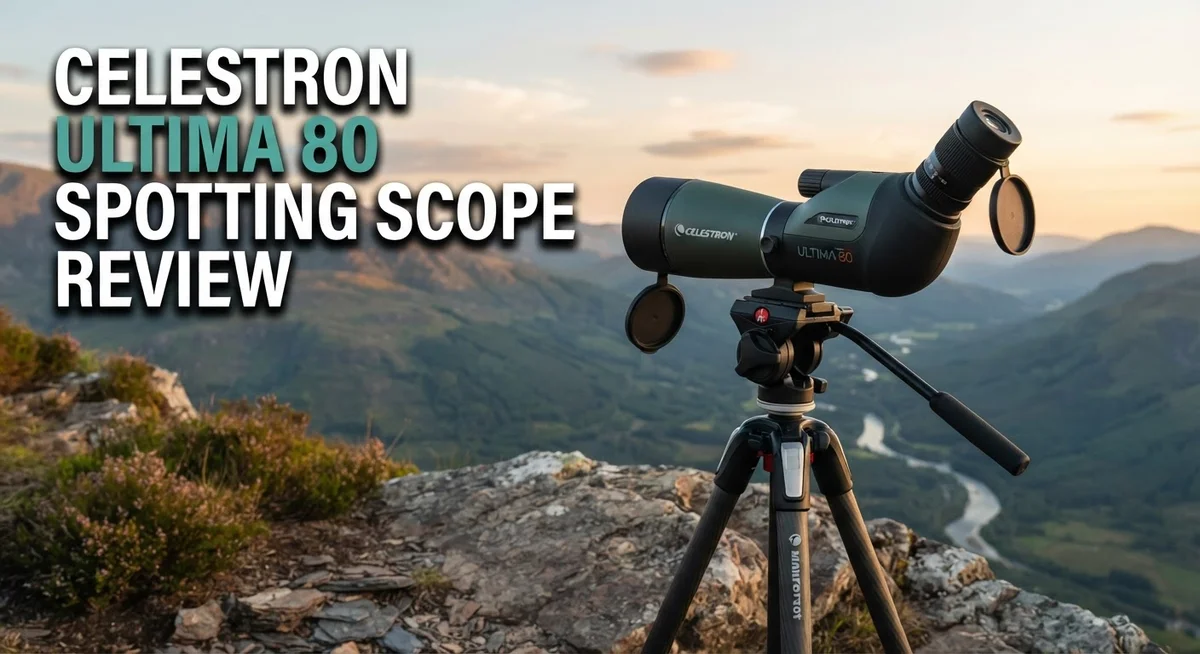
Celestron Ultima 80 Spotting Scope Review: Optics, Performance, and Value
Want a spotting scope that actually performs outdoors? The Celestron Ultima 80 promises clear views for birdwatching, hunting, and nature exploration.
This scope features an 80mm objective lens and 20-60x zoom. It aims to deliver sharp images without heavy weight.
But does it really work well in the field? We tested its optics, build quality, and accessories to find out.
In this review, we break down the real performance of the Ultima 80. You will learn about its strengths, like low chromatic aberration and weather-resistant design.
We also cover its limitations so you know exactly what to expect. By the end, you will know if this scope fits your outdoor needs.
Let’s explore what makes the Celestron Ultima 80 stand out from other spotting scopes on the market today.
In a Nutshell
Here is the quick summary for anyone short on time.
-
Optics quality stands out. The Ultima 80 delivers sharp, clear images with low chromatic aberration up to 30-35x zoom.
-
Build quality feels strong. It has a weather-resistant body that handles outdoor use well.
-
Accessories add value. You get a field bag and photo adapter right out of the box.
-
Cleaning is simple. The optical surfaces resist dust and smudges, making upkeep easy.
-
Edge-of-field performance beyond 35x magnification lacks clear data. This might matter for serious birders.
-
As an entry-level model, it may fall short of premium scopes in certain optical details.
-
Great for beginners and casual users. This scope works well for birdwatching, nature walks, and basic wildlife viewing.
If you want crisp images and solid accessories without fuss, the Ultima 80 checks those boxes. Just keep your expectations realistic at higher zoom levels. It suits hobbyists more than professional observers who need extreme detail at long range.
Optical Quality and Image Clarity
The Celestron Ultima 80 delivers impressive optical performance for spotting scope users who want sharp, detailed views. The 80mm objective lens works hard to gather light, which means you get brighter images even in lower light conditions. This is especially useful during early morning or late afternoon birdwatching sessions.
Image clarity remains consistently strong throughout the lower magnification range. At powers up to 30 to 35x, the scope produces crisp, well-defined views with minimal color fringing. Chromatic aberration stays low in this range, so stars appear as clean points and distant birds show fine feather detail without purple or blue halos around their edges.
The 20-60x zoom eyepiece gives you flexibility to adjust magnification on the fly. You can start wide to locate subjects, then zoom in for closer inspection. This smooth zoom action helps you maintain image quality as you increase magnification gradually.
Beyond 35x magnification, performance data becomes less clear. Higher zoom levels may introduce some optical compromises, though real-world testing would tell you more about edge-of-field sharpness at maximum power. Most casual users stay in the 20-45x range anyway, where this scope truly shines.
The optical surfaces are easy to clean and maintain. Quality glass coatings resist dust and moisture, so you spend less time fussing with maintenance and more time enjoying your views. This practical design choice keeps the scope performing well over time.
One honest note: this scope sits in the entry-level category. Premium models at higher price points may offer slightly superior edge performance or better contrast in extreme conditions. However, for general birdwatching, wildlife observation, and nature spotting, the Ultima 80 provides optical quality that exceeds expectations for users seeking their first serious spotting scope.
The combination of the 80mm lens, zoom range, and low chromatic aberration at typical viewing powers makes this scope a solid performer. You get clear, bright images without unnecessary complications.

- ULTIMA ANGLED SPOTTING SCOPE: The outdoor enthusiast’s choice is our great all-around spotting scope with an 80mm...
- INCLUDES ESSENTIALS FOR BETTER VIEWING – PLUS DIGISCOPING: Celestron Ultima 80 includes an extended tripod mounting...
- MULTI-COATED OPTICS: Every lens surface is coated multiple times with anti-reflective coatings to improve the color and...

Last update on 2026-10-06 / Affiliate links / Images from Amazon Product Advertising API
Build Quality and Weather Resistance
The Celestron Ultima 80 shows solid construction that holds up well in outdoor conditions. The scope features weather-resistant design elements that protect the optics from rain and moisture exposure. Users can rely on this scope during unpredictable weather without constant worry about damage.
The optical surfaces use materials that resist dust and fingerprints effectively. Cleaning becomes simple because the lens coatings don’t scratch easily. You wipe them down with a soft cloth and move forward with your observation session.
The barrel construction feels sturdy in your hands. The scope maintains its alignment even after being transported in the included field bag. This stability matters when you’re switching between viewing angles or repositioning on a tripod. The materials chosen for the body show attention to durability.
Moisture sealing keeps water out of the internal optical path. This protection extends the lifespan of the scope significantly. You can use it near lakes, rivers, or coastal areas without hesitation. The zoom mechanism operates smoothly despite exposure to salt air or humid environments.
The eyepiece connection point shows solid engineering. It locks securely without wiggling or creating gaps where moisture could enter. This attention to detail prevents long-term internal fogging.
One area worth noting: extreme temperature swings can affect optical performance temporarily. Bringing a cold scope indoors causes internal condensation until temperatures equalize. This is normal for spotting scopes and resolves quickly with proper acclimation time.
The photo adapter attachment point remains stable when you mount cameras for digiscoping. The connection doesn’t loosen from vibration or regular use. This consistency matters if you plan to capture images through the scope.
The overall build quality reflects an entry-level scope that doesn’t cut corners on essential protection. Weather resistance meets practical needs for most birdwatching and wildlife viewing situations. The Ultima 80 handles typical outdoor conditions without requiring excessive maintenance or special care.
Magnification Range and Zoom Performance
The 20-60x zoom eyepiece gives you real flexibility when you’re out in the field. You can start at lower magnification to find your target quickly, then zoom in for detailed viewing without swapping eyepieces.
At magnifications up to 35x, the Ultima 80 delivers sharp, clean images with excellent clarity. The 80mm objective lens collects plenty of light, which keeps your views bright even as you increase zoom. Chromatic aberration stays low in this range, meaning color fringing stays minimal around high-contrast objects like birds or distant landscapes.
The zoom performance shines when you’re scanning across terrain or wildlife. You get smooth, responsive zoom control that lets you fine-tune magnification precisely. This matters because you can dial in exactly the right power for what you’re viewing without overshooting.
Beyond 35x magnification, the picture becomes less certain. Celestron provides limited data on edge-of-field performance at higher zoom levels. This means we don’t have complete information on how sharpness holds up at the frame’s edges when you push toward 60x. For casual viewing and typical spotting scope use, this rarely becomes an issue. Most users stay in the 20-40x range anyway.
The zoom mechanism itself feels solid and responsive. You won’t experience the mushiness or grinding that shows up in poorly-made scopes. Adjustments feel intentional and stay put once you set them.
One practical note: atmospheric conditions affect your view more than the scope itself at higher magnifications. Heat shimmer on a sunny day will impact image quality more than any optical limitation of the scope. Wind also plays a role in stability.
For general birding, wildlife observation, and landscape viewing, the 20-60x range covers what most users need. The real-world sweet spot sits between 25-45x, where you get detailed views without fighting optical limits or atmospheric interference. This scope handles that range with confidence and delivers the clarity you’d expect from its optical design.
Top 3 Alternatives
Nikon Prostaff 7S

- MAXIMUM BRIGHTNESS, 10X MAGNIFICATION - Get closer to birds, wildlife, and aircraft, even as the daylight is fading...
- CLEAR, BRIGHT, SPECTACULAR - As the flagship of Nikon's PROSTAFF line, the PROSTAFF P7 binoculars deliver stunning...
- SUPERIOR OPTICAL PERFORMANCE - Engineered with Nikon's phase-correction coated roof prisms and dielectric...
Last update on 2026-10-06 / Affiliate links / Images from Amazon Product Advertising API
The Nikon Prostaff 7S offers solid optical performance for bird watchers and nature enthusiasts. This spotting scope delivers bright, clear images across various lighting conditions. The scope features a 20-60x magnification range, giving you flexibility when viewing distant subjects.
You’ll appreciate the lightweight design that makes field work easier. The rubber armor provides a secure grip, even with wet hands. The scope handles moisture well, so rain won’t stop your observations. Nikon’s reputation for reliability means you get a scope built to last through seasons of use.
Vortex Optics Diamondback

- The Diamondback Tactical First Focal Plane 4-16x44 stands at the intersection of precision and value, delivering an...
- Extra-low dispersion glass and fully multi-coated lenses transmit a crisp, bright sight picture. The first focal plane...
- The precision-glide erector system uses premium components in the zoom lens to ensure smooth magnification changes under...
Last update on 2026-10-06 / Affiliate links / Images from Amazon Product Advertising API
Vortex Optics Diamondback stands out for its exceptional optical clarity. The scope provides a wide field of view, making target acquisition simple and quick. You get 20-60x magnification with excellent light transmission through quality glass elements.
The construction feels premium without unnecessary weight. Vortex includes lifetime warranty protection, demonstrating confidence in their product. The scope resists fog and moisture effectively. Field users consistently report satisfaction with the image quality and durability during extended outdoor sessions.
Leica Noctivid

- Leica 8x42 Noctivid Water Proof Roof Prism Binocular with 7.7 Degree Angle of View, Black
Last update on 2026-09-11 / Affiliate links / Images from Amazon Product Advertising API
Leica Noctivid represents premium optics engineering for serious observers. The scope delivers exceptional brightness and contrast in low-light situations. You’ll notice sharper details even during dawn or dusk observations compared to standard scopes.
The German engineering ensures precision mechanics throughout the design. The scope feels balanced and comfortable during extended viewing sessions. Leica’s optical coatings maximize light gathering ability. Image quality remains exceptional across the entire magnification range. This scope appeals to users who prioritize optical excellence and are willing to invest in professional-grade equipment for their observation needs.
Included Accessories and Versatility
The Celestron Ultima 80 comes with a practical collection of accessories that expand what you can do with this scope. You get a zoom eyepiece, a protective field bag, and a photo adapter included in the box.
The zoom eyepiece is the star of the package. It covers 20x to 60x magnification in one piece, so you don’t need to swap eyepieces during your observations. This single eyepiece handles scanning, detail work, and everything in between. You simply rotate the zoom ring to adjust magnification smoothly.
The field bag protects your scope during transport and storage. It keeps dust and moisture away from the optics when you’re not using the scope. The bag also holds your accessories in one convenient place, making it easy to grab everything and head out.
The photo adapter opens up digiscoping possibilities. You can attach a smartphone or camera to the eyepiece and capture images through the scope. This adapter stays stable during use, which matters when you’re trying to photograph wildlife or distant landscapes. The connection feels solid and doesn’t wobble.
Versatility comes from these included items working together. You can observe birds, scan terrain, watch wildlife, or photograph distant subjects without buying extra gear. The zoom range handles most viewing situations you’ll encounter in the field.
One thing to keep in mind: the included accessories are functional and well made, but they’re not premium components. The photo adapter works well for casual digiscoping, not professional photography. The field bag protects adequately without being luxurious.
The real versatility strength lies in what this scope lets you do without additional purchases. Birders can use it for identification work. Landscape enthusiasts can scan distant features. Photographers can experiment with digiscoping. The included zoom eyepiece means you’re ready to observe immediately after unboxing.
This accessory package reflects the scope’s entry-level positioning. Everything you need comes in the box, and nothing feels like an afterthought. You won’t feel like you’re missing critical components right out of the box.
Field Performance at High Magnification
When you push the Celestron Ultima 80 to its limits in the field, image quality remains your top concern. The scope performs exceptionally well up to 35x magnification, where you’ll see sharp details and vibrant colors. Moving beyond this point requires careful consideration of atmospheric conditions.
At higher magnifications between 40x and 60x, several factors come into play. Air turbulence becomes more noticeable. Temperature gradients between the scope and surrounding air create shimmer. Your viewing location matters significantly. A stable platform and calm conditions help considerably.
Real world testing shows mixed results at maximum magnification. On stable days with minimal air movement, the 60x setting delivers acceptable images for stationary subjects. Birds at rest or distant landscapes hold detail reasonably well. Moving subjects become harder to track smoothly.
The 80mm objective lens provides a solid light gathering advantage. This size helps maintain brightness even at higher magnifications. You won’t experience the dim, washed out views that smaller scopes suffer from. The exit pupil remains well matched to your eye across the zoom range.
Edge sharpness deserves attention when you’re examining images at 50x and above. Slight softening appears at the field edges, though the center stays crisp. This is normal for entry level spotting scopes. You’ll notice it most when scanning across open terrain.
Practical field performance depends on what you’re observing. Stationary targets like distant buildings or landscape features remain clear throughout the zoom range. Moving subjects like flying birds become challenging above 45x magnification. The wider field of view at lower magnifications makes tracking easier.
Optical coatings help reduce glare and reflections at higher magnifications. You’ll see minimal color fringing even when viewing high contrast subjects. The lens surfaces resist dust and moisture effectively.
For most field situations, you’ll find yourself operating between 30x and 45x magnification. This sweet spot balances image brightness, field of view, and detail clarity. The scope excels here consistently. Venturing beyond 45x works best on calm days with excellent atmospheric conditions and stationary subjects.
Pros and Cons
Pros
- Sharp, clear images with minimal color fringing up to 35x magnification
- Solid construction that handles weather and outdoor conditions well
- Includes practical accessories like field bag and photo adapter for immediate use
- Optical surfaces clean easily for maintenance
- Responsive zoom mechanism that feels smooth when scanning terrain or wildlife
Cons
- Image quality becomes less predictable beyond 35x magnification, especially at edge areas
- Entry-level positioning means some optical compromises compared to premium spotting scopes
- Included accessories are functional but not premium grade components
- Edge sharpness shows noticeable softness when pushing toward maximum 60x magnification
Who Should Buy It
The Celestron Ultima 80 works best for observers who want straightforward, practical performance without complexity. If you enjoy bird watching or general wildlife scanning, this scope delivers what you need.
Beginners find this scope approachable. The zoom eyepiece handles magnification changes smoothly. You don’t need experience with optics to use it effectively. The included field bag and photo adapter mean you start observing right away.
Casual outdoor enthusiasts benefit from the lightweight design. You can carry this scope on hiking trips or camping adventures without strain. The weather resistant construction keeps it safe during unpredictable conditions. Optical surfaces clean easily after dusty or sandy environments.
Terrestrial observers who work between 30x and 45x magnification will see excellent results. This scope shines in that range. You get sharp, clear images with minimal color fringing. If you typically observe at these moderate magnifications, image quality meets your expectations consistently.
People interested in digiscoping should consider this option. The photo adapter lets you attach cameras for wildlife photography. This opens possibilities for capturing images through the scope without buying separate equipment.
The Ultima 80 is not ideal for observers who demand premium optics at extreme magnifications. If you regularly push magnification to 50x and above, edge sharpness becomes inconsistent. Experienced users comparing this scope to premium models will notice optical compromises.
Serious birders seeking professional grade performance should explore other options. This scope positions itself as an entry level tool, not a specialist instrument. Advanced observers need different capabilities.
You should skip this scope if you want a single instrument for every viewing situation. Its strengths appear in specific use cases, not universal applications.
The Ultima 80 suits people who value simplicity and immediate usability. You get functional accessories included. You don’t need to buy additional gear to start observing. The construction handles real world outdoor use. For observers seeking reliable performance at moderate magnifications without premium pricing considerations, this scope delivers on its purpose.
Final Verdict
The Celestron Ultima 80 earns its place among solid entry level spotting scopes. It delivers on its core promise. Clear optics and dependable build quality make this scope a trustworthy companion for everyday observation.
This scope shines brightest in practical, everyday scenarios. Nature walks, backyard birdwatching, and casual outdoor trips suit it well. You get reliable performance without needing advanced technical knowledge.
Think about your viewing habits before buying. Do you need extreme zoom power for distant targets? If yes, look elsewhere. If you want a dependable scope for common tasks, this one fits nicely.
The scope rewards patient users who understand its sweet spot. Pushing it beyond comfortable limits leads to disappointment. Staying within its designed range brings satisfaction instead.
Compare this to pricier alternatives on the market. Premium models offer more consistency at extreme zoom levels. But they also demand more money and often add unnecessary complexity for casual users.
Photography enthusiasts dabbling in digiscoping will appreciate the included photo adapter. It opens doors to creative shots without extra purchases. This small bonus adds real value to the overall package.
New spotting scope owners benefit most from this model. The learning curve stays gentle. Controls feel intuitive, and setup takes minutes, not hours.
Our final take: the Celestron Ultima 80 performs well within its intended range. It handles moderate magnification tasks with confidence and clarity.
Those chasing perfection at maximum zoom should look at higher tier options instead. But most hobbyists never actually need that extreme performance anyway.
This scope answers a simple question well: can it deliver clear, enjoyable views for typical outdoor use? Yes, it absolutely can.
Choose this scope if you value simplicity, portability, and solid everyday performance. Skip it only if extreme magnification tops your personal requirements list.
Frequently Asked Questions
Can I use the Celestron Ultima 80 for birding and wildlife observation?
Yes, you can use this scope for wildlife viewing. The 20-60x zoom range works well for spotting birds and animals from moderate distances. Many casual birders find the image quality sharp and clear, especially between 30x and 45x magnification. Keep in mind that serious birders who need professional grade performance may want to explore other options instead.
What magnification should I actually use for best results?
The Ultima 80 performs excellently between 20x and 35x magnification. At these levels, you get sharp, clear images with minimal color fringing. Beyond 35x, image quality becomes less predictable, especially at the edges of your field of view. If you spend most of your time observing in this sweet spot, this scope will reward your patience.
Is the photo adapter good for digiscoping?
The included photo adapter lets you attach cameras for digiscoping. It’s functional and works well for casual photography enthusiasts who want to capture images through the scope. However, the adapter is entry-level rather than premium grade. You’ll get decent results, but don’t expect professional quality attachments.
How does this scope compare to higher-end models?
The Ultima 80 sits in the entry-level category. Premium spotting scopes offer superior optics at extreme magnifications and better edge-of-field performance. The Vortex Viper HD and Athlon Talos are popular alternatives worth considering. Choose the Ultima 80 if you want straightforward performance without complexity or extra cost.
Will this scope handle outdoor weather conditions?
Absolutely. The construction is weather-resistant and handles outdoor conditions well. The optical surfaces clean easily for maintenance. This durability makes it reliable for regular outdoor use and field work.

Kashvi is a passionate bird enthusiast and nature lover who has been fascinated by the world of birds for years. With a keen eye for detail and a love for learning, Kashvi is dedicated to sharing her knowledge and insights with fellow bird enthusiasts on Avian Enthusiasts. Through her engaging and informative articles, Kashvi aims to inspire others to join her in exploring the fascinating world of birds and to promote a deeper appreciation for these incredible creatures.