
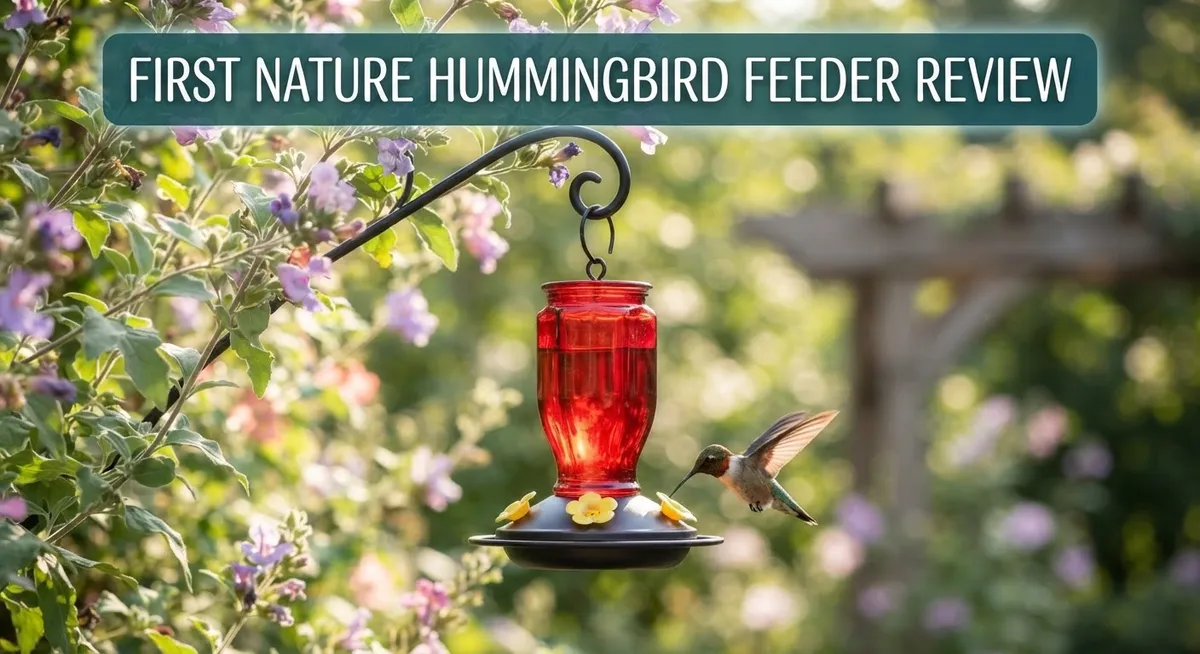
First Nature Hummingbird Feeder Review: Design, Performance & Durability
Hummingbirds bring color and life to any backyard. If you want to attract more of them, the right feeder makes all the difference.
The First Nature Hummingbird Feeder catches attention fast. Its bright red base and wide ports draw hummingbirds in from afar.
This feeder comes in two sizes, 16 oz and 32 oz. Both offer 10 feeding ports, so multiple birds can feed at once.
People love how easy it is to clean. The design also stops annoying leaks and drips.
But is it really the best choice for your garden? We dug into real user reviews and expert feedback to find out.
In this review, we break down the pros, the cons, and everything in between. You will learn if this feeder truly lives up to the hype.
Let’s explore what makes this feeder a favorite among bird lovers everywhere.
In a Nutshell
Here’s the quick rundown on this feeder before you decide:
- Ten feeding ports let multiple hummingbirds feed at once without crowding.
- The no-leak design keeps nectar inside, so you won’t waste a drop or attract ants to puddles.
- A sturdy two-part base and included perch make this feeder built to last outdoors.
- It’s made in the USA, which many buyers see as a mark of quality.
- Some users report a design flaw that may pose safety risks to birds. Check reviews before you buy.
- There’s no ant moat on the 16 oz model, so insects can still find their way to the nectar.
- Yellow ports might draw unwanted bugs, not just hummingbirds.
- Leave it out too long, and mold can become a problem. Regular cleaning is a must.
Overall, this feeder earns high marks from users for performance. But it’s smart to weigh the reported risks and upkeep needs first. Compare it with options like the More Birds Glory Feeder to see what fits your yard best.
Design and Build Quality
The First Nature Hummingbird Feeder stands out for its straightforward, no-nonsense construction. The feeder uses a two-part base system that screws together securely, keeping everything locked in place during windy days or when birds land.
The red coloring on the base serves a real purpose. Hummingbirds respond to red as a feeding signal, so this design choice works with nature rather than against it. The wide mouth opening on the 32 oz model makes refilling and cleaning faster than narrow-necked alternatives.
Ten feeding ports give multiple birds room to eat without competition. Each port sits at a comfortable angle, letting hummingbirds feed naturally. The included perch adds stability for smaller or tired birds, though hummingbirds don’t always use perches.
Materials matter for outdoor feeders. This model uses durable plastic that resists cracking from sun exposure over months of use. The glass or plastic components don’t degrade quickly like cheaper feeders do. Hand washing only keeps the feeder in top shape, so avoid the dishwasher.
The no-leak design prevents nectar from dripping onto the base. This feature stops ants and other insects from gathering around spilled liquid. However, the yellow ports themselves may attract bugs you don’t want near your feeder. Some users suggest painting them red as a workaround.
One important note: several users on online forums flagged a design concern related to how the feeding ports connect. The issue involves potential sharp edges or gaps where birds could get stuck. If you choose this model, inspect the ports carefully before hanging it outside.
The 16 oz version lacks an ant moat, which means determined insects can still climb the mounting pole. The 32 oz model offers more capacity, so you refill less often. Both sizes maintain the same basic build quality and port design.
Overall, the construction feels solid and purposeful. It’s built to handle outdoor weather and constant use. Just inspect it regularly and clean it promptly to prevent mold growth inside the chambers.

Last update on 2026-07-11 / Affiliate links / Images from Amazon Product Advertising API
Capacity and Feeding Ports
The capacity and feeding ports are where this feeder truly shines for backyard bird enthusiasts. The First Nature Hummingbird Feeder offers two size options: a 16 oz model for smaller yards and a 32 oz version for high-traffic feeding areas.
The 10 feeding ports represent a major advantage. Multiple hummingbirds can drink simultaneously without fighting over a single opening. This design reduces stress among birds and encourages natural feeding behavior. Each port sits on the two-part red base, which attracts hummingbirds from a distance.
The 32 oz model features a wide mouth design that makes refilling and cleaning much simpler. You can easily reach inside with your hand or a soft brush. This wider opening also helps prevent nectar from sitting stagnant in hard-to-reach corners where mold can grow.
One critical detail: the 16 oz model does not include an ant moat. This means insects can still climb the mounting pole and reach the nectar. If you live in an area with aggressive ants, this becomes a real problem. The 32 oz version may offer better options for ant protection, though you should verify this before purchasing.
The no-leak design keeps nectar contained within the feeder itself. You won’t see puddles forming beneath the base, which is important. Spilled nectar attracts ants and other insects you don’t want around your hummingbirds. This sealed construction protects both your birds and your yard.
A perch comes included with every feeder. Hummingbirds can rest between feeding sessions, which reduces their energy expenditure. This thoughtful addition shows the manufacturer understands bird behavior.
The yellow ports may catch your eye, but here’s a concern: they might also catch the attention of wasps and bees. Some users report that insects hover around these colored openings. If pest insects become a problem, you may need to position your feeder away from other flowering plants.
Overall, the capacity and port system work together to create a functional feeding station. The choice between 16 oz and 32 oz depends on your local hummingbird population and how often you want to refill.
Ease of Cleaning and Maintenance
Cleaning this feeder is straightforward and takes just a few minutes. The wide mouth design on the 32 oz model lets you reach inside easily to scrub away residue and mold. You can use warm soapy water and a soft brush to clean all surfaces without struggle.
Hand washing is the only method you should use. The feeder is not machine washable, so skip the dishwasher completely. This protects the plastic and ensures the feeding ports stay in perfect condition for your hummingbirds.
The two part base comes apart quickly, which means you can clean every section thoroughly. Disassemble the feeder, wash each piece separately, and let everything air dry before reassembling. This takes away the guesswork about hidden spots where mold might hide.
Mold can develop if you leave the feeder out too long without cleaning. Regular maintenance prevents this problem. Aim to clean your feeder every three to five days during warm weather. In cooler months, you can stretch this to once a week since nectar breaks down more slowly.
The no leak design helps reduce mold risk in the first place. Since nectar stays contained inside the feeder, it doesn’t pool on the base where moisture sits and breeds mold. This smart design cuts down on your cleaning workload overall.
Pay special attention to the feeding ports when you clean. These small openings can trap old nectar and debris. Use a thin brush or pipe cleaner to clear out each port individually. This step matters because blocked ports prevent hummingbirds from feeding properly.
Store your feeder in a cool, dry place during off season. If you use multiple feeders and rotate them, you can clean one while another hangs outside. This rotation system keeps fresh nectar available to your birds without downtime.
The lack of an ant moat on the 16 oz model means you should clean the mounting pole too. Wipe down the hook or pole where you hang the feeder to remove any sticky residue. This simple step stops ants from finding an easy path to the nectar.
Top 3 Alternatives
Perky-Pet Glass Hummingbird Feeder

- ACCOMADATES MULTIPLE BIRDS: Every feeder features four flower-shaped feeding ports with comfortable U-shaped perches...
- 8 OZ CAPACITY: Each 2-pack of glass hummingbird feeders have 8oz nectar capacity, providing ample feeding space for...
- BUILT-IN ANT MOAT & BEE GUARDS: Add water to the built-in ant moat to keep ants away, while the bee guards prevent bees...

Last update on 2026-07-11 / Affiliate links / Images from Amazon Product Advertising API
This classic feeder features a glass bottle design that lets you monitor nectar levels easily. The bright red base attracts hummingbirds quickly. The feeder holds a generous amount of nectar, so you refill less often. Perky-Pet uses durable materials that withstand outdoor weather. The feeding ports have bee guards to keep insects away from your hummingbirds. Many users appreciate how simple this feeder is to clean and maintain.
Aspects HummZinger Feeder

- The feeder includes a high view perch that invites hummingbirds to rest comfortably as they drink from any of four...
- Bright red cover attracts humming birds from a distance and is easily removed so the bowl can be cleaned quickly and...
- Constructed of unbreakable polycarbonate.
Last update on 2026-07-24 / Affiliate links / Images from Amazon Product Advertising API
The HummZinger stands out with its innovative bee-proof design. It features a floating perch that moves down as the hummingbird feeds, blocking bees and wasps from reaching the nectar. This feeder comes in multiple colors and styles to match your garden aesthetic. The wide-mouth bottle opening makes filling and cleaning straightforward. Aspects engineered this feeder to reduce leaks, keeping your deck cleaner. Hummingbirds love the multiple feeding stations this model provides.
Homestead Hummingbird Feeder

- Attractive Hummingbird Feeder: Red hummingbird feeder can hold 15 ounces of nectar and easy to attract hummingbirds.
- Leak-Proof Design: Our bee-proof humming bird feeder made of high quality plastic material, sturdy and durable, high...
- Keep Insects Out: Plastic hummingbird feeders for outdoors hanging has a built-in ant moat, fill ant moat with water...
Last update on 2026-10-06 / Affiliate links / Images from Amazon Product Advertising API
The Homestead feeder combines elegant design with practical function. It features a sturdy base that resists tipping in wind. The feeder’s glass construction allows you to see nectar levels at a glance. Homestead designed the feeding ports to discourage insects while welcoming hummingbirds. This model works well for both beginners and experienced bird enthusiasts. The feeder disassembles easily for thorough cleaning, which helps prevent mold and bacteria growth.
Each of these feeders offers unique benefits. Your choice depends on your specific needs, garden setup, and hummingbird activity in your area.
Hummingbird Attraction and Safety Features
The First Nature Hummingbird Feeder brings several safety features that matter for both your birds and your yard. The red base does more than look pretty. Hummingbirds see red and come to investigate, which makes this feeder naturally effective at drawing them in.
The ten feeding ports spread birds out across the feeder. This spacing reduces aggressive behavior and fighting at the food source. More ports mean less crowding, and less crowding means safer feeding times for smaller or younger birds.
One safety concern deserves your attention. Users have reported a design flaw with how the feeding ports connect to the main chamber. This issue can cause nectar to leak or pool in ways that create problems. Check the port connections when you first set up your feeder, and inspect them regularly during the season.
The yellow colored ports present a mixed picture. While they help you see when nectar levels drop, they may also attract wasps and bees to your feeder. This creates competition and potential danger for hummingbirds. Monitor your feeder during warm months when insects are most active.
The 16 oz model lacks an ant moat, which is a genuine safety gap. Ants can reach the nectar and contaminate it. If you choose this size, mount your feeder away from tree branches and clean the pole regularly to discourage ant traffic.
The no-leak design keeps nectar contained, which prevents sticky buildup that attracts insects and pests. This feature indirectly protects your hummingbirds by keeping the feeding area cleaner.
Mold growth poses a hidden safety risk that many people overlook. If you leave nectar sitting in the feeder too long, mold develops inside the ports and chamber. Your hummingbirds can ingest mold spores when they feed. Clean your feeder every three to five days, even more frequently in hot weather.
Store the feeder indoors during off season to prevent material degradation. This simple step keeps the structure sound and safe for next year’s birds.
Durability and Weather Resistance
This feeder holds up well against sun, rain, and temperature swings that come with outdoor use. The construction feels solid when you hold it, and users consistently report that it survives multiple seasons without cracking or fading.
UV exposure matters for outdoor feeders. The red base maintains its color even after months of direct sunlight. The plastic components resist degradation from heat and cold, which means your feeder works just as well in spring warmth as it does during cooler fall months.
Rain and moisture present the biggest durability challenge. The no-leak design prevents water from pooling inside the feeder, which extends the life of all parts. Standing water would cause rust on metal components and accelerate mold growth. This feeder avoids that problem through smart engineering.
However, mold growth remains a real concern if you leave the feeder outside during rainy periods without regular cleaning. Nectar sitting in the ports can develop fuzzy growth within days of heavy rain. You should empty and clean the feeder every three to five days, especially during humid seasons. This maintenance step protects both the feeder and your hummingbirds.
The two part base design actually helps with durability. You can separate the pieces completely, which allows air to circulate and dry everything thoroughly. This prevents moisture from getting trapped inside and causing material breakdown.
Winter storage plays a key role in long term durability. Leaving the feeder exposed to freezing temperatures and snow can crack the plastic over time. Store it indoors during off season months when hummingbirds aren’t active in your area.
One design flaw deserves mention: some users reported issues with the port system that could affect structural integrity over time. Check your specific model to ensure all ports fit snugly and don’t show signs of loosening.
The feeder generally lasts three to five years with proper care. That’s solid performance for regular backyard use. Hand washing only and avoiding direct freezing temperatures are your best tools for maximizing lifespan.
Pros and Cons
Pros
- Easy hand washing takes just a few minutes with warm soapy water
- No leak design keeps nectar contained and reduces mold risk
- Ten feeding ports let multiple birds feed at once without crowding
- Red base attracts hummingbirds naturally and resists fading from sun exposure
- Sturdy construction holds up well through rain, temperature changes, and outdoor weather
Cons
- Hand wash only means no machine washing option for quick cleaning
- Yellow colored ports may attract unwanted insects to your feeder
- 16 oz model lacks an ant moat, so you’ll need to clean the mounting pole separately
- Some users reported design issues with the port system that could affect how the feeder holds together
Who Should Buy It
This feeder works best for people who want a straightforward feeding solution without complicated maintenance routines. You’re a good fit if you enjoy hand washing gear and don’t mind spending a few minutes on upkeep each time you refill.
Backyard bird enthusiasts will appreciate the 10 feeding ports. Multiple hummingbirds can eat at once without aggressive territorial battles. The red base naturally draws birds to your yard, so you’ll see more visitors without extra effort.
Homeowners with moderate climates should consider this option. The feeder handles regular rain and sun exposure well. However, if you live in a humid or rainy area, you’ll need to clean it more frequently to prevent mold buildup. This requires commitment on your part.
People looking for easy assembly will love this feeder. The two-part base design comes together quickly. You can hang it and start attracting birds within minutes. No complicated setup steps get in your way.
The 32 oz model suits those who refill feeders less often. Its wider mouth design makes cleaning simpler and faster. You’ll spend less time maintaining it compared to smaller feeders.
Skip this feeder if you want a machine-washable option. Hand washing only is the rule here. If you prefer quick cleanups, look elsewhere.
Families with young children benefit from the sturdy construction. The feeder won’t break easily if accidentally dropped or mishandled. It holds up through rough outdoor conditions.
You should avoid this model if you need an ant moat on the 16 oz size. That version lacks built-in ant protection. You’d need to add your own solution separately. The 32 oz model doesn’t have this issue.
People in areas with many insects should know about the yellow ports. They may attract unwanted bugs alongside hummingbirds. Regular cleaning helps manage this problem.
Budget conscious bird lovers appreciate the value here. You get solid performance without unnecessary extras. This feeder does one job well: feeding hummingbirds reliably. It’s perfect for someone starting their bird feeding hobby or upgrading from a basic feeder.
Final Verdict
The First Nature Hummingbird Feeder earns its place as a solid choice for backyard bird lovers. This feeder balances function and simplicity in a way that works for most households.
Overall, it delivers on its main promise. Hummingbirds flock to the red base and feed comfortably from the multiple ports. The design feels thoughtful, even with a few quirks.
Compared to competitors like the More Birds Glory feeder, this model holds its own. It offers similar functionality without unnecessary complexity. You get a straightforward product that does its job well.
This feeder fits best for casual bird watchers. People who enjoy watching hummingbirds but do not want constant upkeep will appreciate this model. It rewards simple routines over complicated maintenance schedules.
Experienced birders might want more advanced features. Those who need built in ant moats or machine washable parts may look elsewhere. This feeder keeps things basic, which works for many but not everyone.
Think about your climate before buying. People in rainy regions need to stay on top of cleaning schedules. Those in drier climates will find upkeep much easier overall.
The build quality stands out as a major strength. This feeder survives drops, bumps, and rough handling. Families with active kids or pets will value this durability.
Our overall take? This feeder earns its reputation as a reliable option. It suits most backyard setups without demanding too much effort.
Final recommendation: Choose this feeder if you want simple, effective hummingbird feeding. Skip it only if you need specific features like ant moats or dishwasher safe parts.
In short, this feeder checks most boxes for casual and dedicated bird watchers alike. It handles everyday use well and keeps hummingbirds coming back. Minor flaws exist, but they do not outweigh the overall value this feeder brings to your backyard setup.
Frequently Asked Questions
Does the First Nature Hummingbird Feeder leak or drip?
No, this feeder uses a no-leak design. The two-part base system keeps nectar inside until a hummingbird feeds. You won’t find puddles under the feeder or sticky spots on your deck.
Can I put this feeder in the dishwasher?
Hand washing only. Warm soapy water cleans it best. You cannot use a machine washer or dishwasher. This protects the feeder’s parts from damage during hot cycles.
What’s the difference between the 16 oz and 32 oz models?
The 32 oz model holds twice as much nectar. It features a wide mouth design for easier filling and cleaning. The 16 oz model works well for smaller yards. Note that the 16 oz lacks an ant moat, while the 32 oz may include one depending on the version.
Will insects bother this feeder?
The yellow colored ports may catch the attention of bees or wasps. They see the bright yellow and investigate. Red feeders attract hummingbirds, but yellow attracts other insects. You might need to monitor it during peak insect season or move it to a shadier spot.
How do I prevent mold from growing inside?
Clean the feeder every three to five days. Empty old nectar and scrub the inside with warm water. Let it dry completely before refilling. Mold grows faster in humid climates or if the feeder sits in direct shade. Regular cleaning keeps your hummingbirds safe and the feeder looking new.

Kashvi is a passionate bird enthusiast and nature lover who has been fascinated by the world of birds for years. With a keen eye for detail and a love for learning, Kashvi is dedicated to sharing her knowledge and insights with fellow bird enthusiasts on Avian Enthusiasts. Through her engaging and informative articles, Kashvi aims to inspire others to join her in exploring the fascinating world of birds and to promote a deeper appreciation for these incredible creatures.


